
Mowing in Summer — Height, Frequency and the Most Common Mistakes
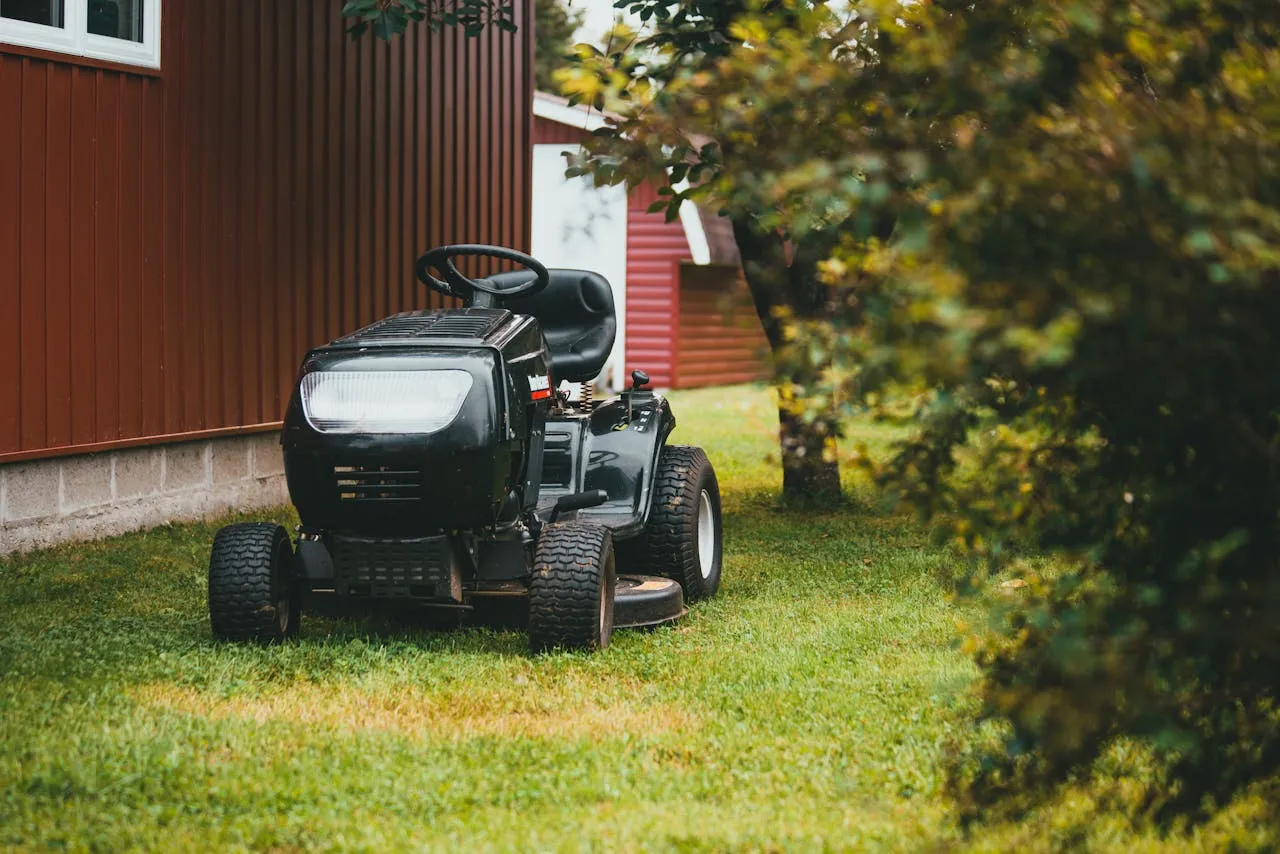
In short: raise the cut to 6–8 cm in summer, against 4–5 cm in spring and autumn, because a longer blade shades its own roots and slows evaporation. Follow the one-third rule and mow with a sharp blade, and let growth rather than the calendar set the interval — in midsummer once every ten to fourteen days can be enough. Never mow drought-stressed grass, wet grass, or at midday.
July and August heat in Srem is a serious test for any lawn. Temperatures above thirty degrees, weeks without rain and the dry air carried in on the košava all work against the grass — yet most of the damage we see at the end of summer doesn't come from drought. It comes from mowing the wrong way. The same mower, the same habits and the same schedule that worked in May give a very different result in August.
Why does the cutting height go up in summer?
In spring and autumn we mow a lawn at 4-5 cm. In summer that height is raised to 6-8 cm, and it is probably the single most important decision you'll make all season.
The reason is simple. A longer blade of grass casts shade over its own roots and over the soil around it. That shade lowers the temperature of the surface layer of soil and slows evaporation considerably, so the water you've given stays available to the roots for longer. On top of that, root depth follows the height of the growth above ground — a lawn mown short has shallow roots, and in the Srem heat those roots have nowhere to draw moisture from. Grass that is dense and a little taller also closes the door on weeds, because weeds germinate wherever light reaches the soil.
A lawn mown to three centimetres in July looks tidy for exactly one day. Within a week it starts showing yellow patches in the most exposed spots, usually along paths and against the south-facing side of a fence.
What is the one-third rule when mowing?
Never remove more than a third of the blade height in a single pass. If you keep the lawn at 7 cm, mow when it reaches roughly 10 cm — not when it hits fifteen.
When you cut off half or more, the plant loses most of the leaf area it uses to make food, and it responds by halting root growth and throwing every resource into rebuilding leaf. That's stressful even in May; in August the consequences are visible for weeks. If the lawn got away from you while you were on holiday, bring it down in two goes a few days apart rather than returning it to the height you want in one pass.
Sharp blades matter more in summer than ever
A blunt blade doesn't cut the grass, it splits and tears it. That kind of wound is wide, ragged and takes days to dry over — look at a lawn two days after it has been mown with a blunt blade and you'll see a whitish-yellow haze across the whole surface. Those are thousands of dried-out tips.
In spring, when there's moisture about and the grass is growing fast, the plant closes a wound like that quickly. In August, with little water to draw on, every such wound is both a loss of moisture and an open door to leaf disease. Sharpen the blade several times a season, and without fail before you head into the hottest part of summer.
Mulching or collecting — which is better in summer?
In summer, mulching is generally the better choice. Finely chopped clippings fall down between the blades, hold moisture in the surface layer and return nutrients to the soil, so the lawn copes with heat more easily. The condition is that you mow often enough and that the grass is dry — mulching overgrown or wet grass leaves clumps that smother the lawn underneath.
Collecting makes sense when the lawn is overgrown, when leaf disease appears, or when weeds have gone to seed and you don't want to spread them across the whole surface.
How often should you mow in summer?
The rhythm is dictated by growth, not by the calendar. In May a lawn often wants mowing twice a week; by midsummer growth slows and once every ten to fourteen days can be perfectly sufficient. The measure is the one-third rule — mow when the grass has grown a third above the height you want, not because it happens to be Saturday.
Watering is worth mentioning here too, because it directly determines how much the grass grows. A lawn needs around 25 mm of water per week in total, rain included, and that should be spread across two deeper waterings rather than a light daily sprinkling. Deeper watering drives roots downward, while daily sprinkling keeps them near the surface, where the soil is hottest and driest.
What are the most common summer mowing mistakes?
- Mowing a lawn that's under drought stress. If the grass doesn't spring back when you walk across it and has taken on a greyish-blue tinge, leave it alone. Mowing in that state is a second blow to a plant that is already struggling. Water it, let it recover, and only then mow.
- Mowing wet grass. Damp blades flatten and only stand up again after the mower has passed, so the cut is uneven; the mower tears them instead of cutting them, mulch sticks together in clumps, and the wheels leave ruts in soft ground. Wait for the dew to lift.
- Mowing at midday. Early morning, as soon as the dew has lifted, or late afternoon and early evening are far better choices. At those times of day the air is fresher and the soil cooler, so a freshly cut blade doesn't have to close its wound under the strongest sun and loses considerably less water.
- Feeding with nitrogen at the height of the heat. Nitrogen in July forces lush, soft, watery leaf that is the first to suffer. Feeding makes sense in spring and early autumn.
- Always mowing in the same direction. Change the direction of your cut from one time to the next, otherwise the blades start to lie permanently one way and the wheels wear fixed tracks.
- Expecting green at any cost. A slight fading of colour in the hottest part of summer is a normal response from grass, not a disease. A lawn that is mown properly and watered regularly comes back on its own as soon as the heat eases.
When should mowing be left to professionals?
Summer mowing is a small job that is unforgiving if you miss it at the wrong moment, so owners of larger gardens and commercial grounds often arrange seasonal lawn maintenance so that mowing, feeding, pruning and checks on the irrigation system run to a plan rather than to whichever weekend happens to be free. If you're not sure what your lawn needs, a site visit and assessment are free, and afterwards you receive a detailed quote with no obligation. Verden, a landscaping and grounds-maintenance company based in Sremska Mitrovica, works across Serbia.